

Reducing Decision Fatigue for Caregivers
What Is Decision Fatigue in Caregiving?
Spring is a busy time, and for family caregivers, it can also introduce a new wave of decisions. Schedules begin to shift. Medical appointments may increase after winter delays. Families start planning for summer travel, childcare, or changes in routine. For caregivers already balancing daily care responsibilities, this seasonal transition can increase decision fatigue: the mental exhaustion that comes from making dozens of big and small care decisions every day.
Case managers, social workers, or other family members may see the effects of this strain before a caregiver does. What begins as minor overwhelm can quickly escalate into burnout if caregivers feel like every decision depends on them.
One way to support caregivers during this time is to introduce a simple “decision reset.” By stepping back and organizing how decisions are made, it becomes easier to reduce stress and create more sustainable care routines.
The 3-Step “Decision Reset” Framework to Reduce Caregiver Decision Fatigue
Step 1: Identify the Overload
Before anything feels lighter, caregivers need space to name what’s heavy. Many people haven’t had that space. These decisions that weigh us down can include anything from medication timing to meal planning to coordinating transportation. Scheduling appointments and managing household responsibilities can also be added stressors. Over time, the constant need to decide becomes mentally draining and contributes to decision fatigue for caregivers. Start by identifying where the strain is coming from:
- “What feels like the hardest thing to manage right now?”
- “Is there anything I’ve been putting off because it just feels like too much?”
- “What’s the decision I dread the most each week?”
The goal in step 1 is simply awareness. When caregivers can clearly see the amount of decisions they’re making, it becomes easier to look for relief. Sometimes, just acknowledging this mental load can help caregivers feel seen and supported.
Step 2: Routine, Delegate, and Decide
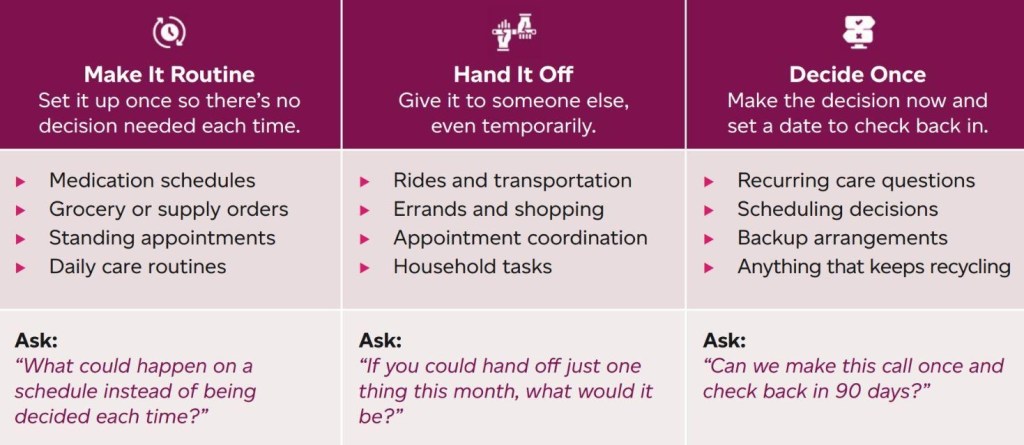
Once the stressful decisions are named, sort them into three buckets: make it routine, hand it off, or decide once. This doesn’t fix everything but breaking it into piles can help choices feel more manageable.
Many caregiving decisions repeat daily or weekly. Try turning these choices into predictable routines by asking, “What could happen on a schedule instead of being decided each time?” Think of tasks like:
- Medication schedules
- Grocery or supply orders
- Standing appointments
- Daily care routines
Caregiving does not have to be a one-person responsibility. Identifying tasks to delegate, even temporarily, can lighten the load. Try asking, “If just one thing could be handed off this month, what would it be?” Start here:
- Rides and transportation
- Errands and shopping
- Appointment coordination
- Household tasks
Some choices don’t need to be revisited constantly. When possible, make a decision once and set a review date instead of reconsidering it every week. Start by asking, “Can we make this call once and check back in 90 days?” This might include:
- Recurring care questions
- Scheduling decisions
- Backup arrangements
- Anything that keeps recycling
Step 3: End With One Small Win
Caregiving can feel like an endless list of responsibilities. Finishing this exercise with one achievable action helps shift that feeling. Round out this framework with some forward momentum by landing on one thing that can be simplified or decided on today.
- “What’s one thing that could make life easier?”
- “If one thing could be taken off the to-do list, what would it be?”
In caregiving, even small shifts can make a meaningful difference. One manageable step forward may be all it takes to start reducing the weight of daily decision fatigue.
Supporting Caregivers Before Decision Fatigue Leads to Burnout
Spring inspires us to reset: a chance to clear out, reassess, and approach daily life with fresh eyes. For caregivers, don’t neglect the “mental clutter” that can take up space, too. By tackling a decision reset early, caregivers can reduce decision fatigue and stress before it builds into something more serious, like caregiver burnout. When the mental load is lighter, caregivers have more capacity to focus on supporting the person they care for.
At Careforth, we strive to provide the resources and connections that ensure caregivers feel supported during their caregiving journey. Visit the Caregiver Support page on our site to learn more about how Careforth can help, or contact us for more information.
More insights like this:
-

Seasonal Caregiving Tips: A Caregiver’s Checklist
Read more: Seasonal Caregiving Tips: A Caregiver’s ChecklistEach season brings new changes in weather, daylight, and daily routines that can affect a loved one’s care. Shorter days may disrupt sleep or increase confusion for those sensitive to changes in light. Shifts in temperature can influence comfort and mobility. Even familiar seasonal activities, such as holiday gatherings or time spent outdoors, may require…
-

Home Safety Hazards Every Caregiver Should Know About
Read more: Home Safety Hazards Every Caregiver Should Know AboutAs adults age, their homes should feel safe, welcoming, and supportive. Yet everyday household features can quietly become risks. Falls, burns, or other preventable injuries are among the most common reasons older adults visit the emergency room. A home that once worked perfectly may now present challenges as mobility, vision, or balance change…
-

How Caregivers Can Create a Safe and Comfortable Home for Aging Loved Ones
Read more: How Caregivers Can Create a Safe and Comfortable Home for Aging Loved OnesFor family caregivers, the home is more than just a living space. It’s where comfort, care, and safety come together. Yet many homes are not naturally designed to support the needs of older adults or those with health challenges. Creating a safe and welcoming environment takes intention, planning, and an eye for the…