
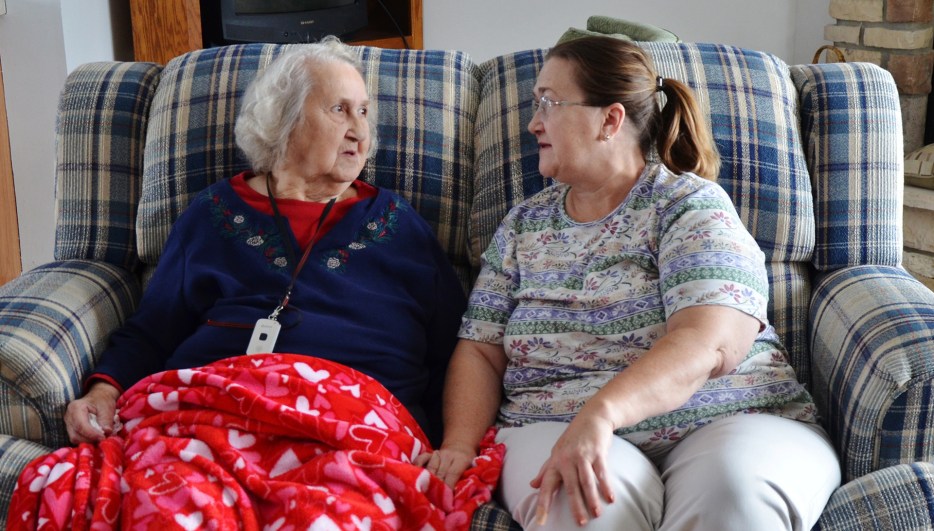
Alice & Edra’s Story
You want them to try to be themselves as much as they can and be able to do things for themselves as much as they can.
Edra: My name is Edra, and I am 86 years old.
Alice: Well, she has a little bit of dementia. She’s a little bit unsteady at times, she’s shaky. She was active, always busy, always busy. She raised 10 kids, so there was always somebody that was nursing, somebody in diapers.
Edra: One reason I got married was because I wanted children. I met my husband at a square dance. I thought he was with another girl that was there, and when he tried to talk to me, I ignored him because that’s rude, you know? He was, you know, coming around quite often. He liked my mother’s cooking.
Alice: My dad needs a lot more care than mom does. He’s in a wheelchair most of the time. Then they finally decided he needed more permanent care so they ended up putting him in the nursing home, and she came down here. How do you feel about being away from dad?
Edra: Oh, happy. I wouldn’t want to be there. We get along good and she, you know, she knows my medicine and everything, and I would forget to take it, you know. She knows what I like to eat and you know.
Alice: Pretty much taking care of other people is basically the same as taking care of your own parent, but I think the difference might be that you might be a little bit more familiar with how they feel, what they like, what they want than you do with somebody else’s parent, you know. But the main thing is to make sure they’re comfortable.
Alice: The most important thing that you need to remember, which is really hard to do when you take on a caregiver role, is you have a tendency to try to reverse roles and become the parent. And it’s very hard to do that because you really don’t want to take the personality away from them. You want them to try to be themselves as much as they can and be able to do things for themselves as much as they can and try to treat them with a little bit of respect, and they are your parent, you know. So that’s a hard thing, I think, for a lot of people.
I didn’t have a problem with taking care of her. It’s just something I’ve done for years and it’s just something that needed to be done. I’d rather have her at home than have her in a nursing home.
My name is Alice and I’m a caregiver for my mother, Edra.
More insights like this:
-
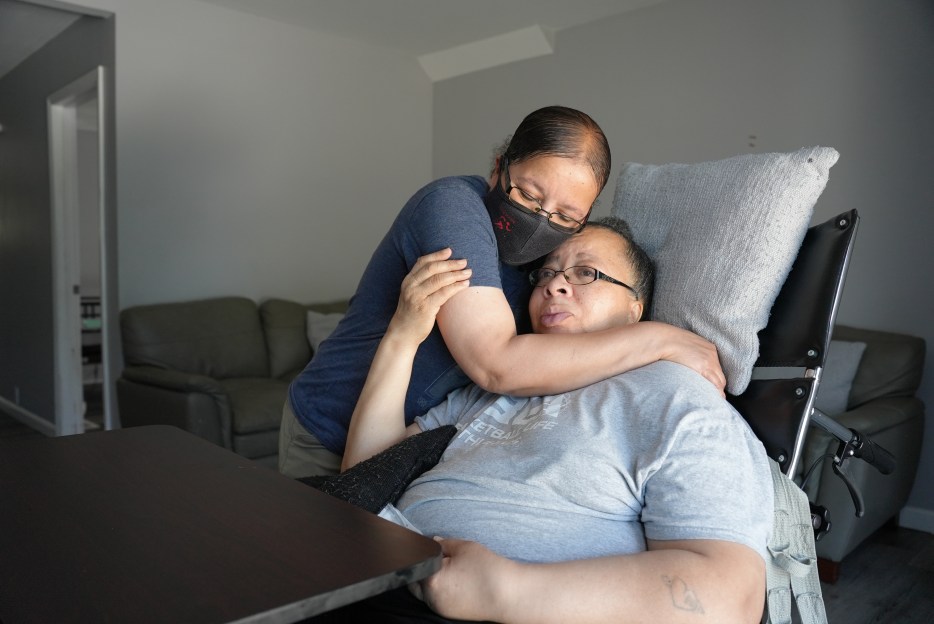
Ellie and Doreen’s Caregiving Story
Read more: Ellie and Doreen’s Caregiving StoryWe extend our heartfelt thanks to Ellie and Doreen for welcoming us into their home and being willing to share their experiences. We hope that by sharing their journey, others who find themselves in similar situations can find inspiration, support, and encouragement to build their own networks of care and connection. “I can’t…
-
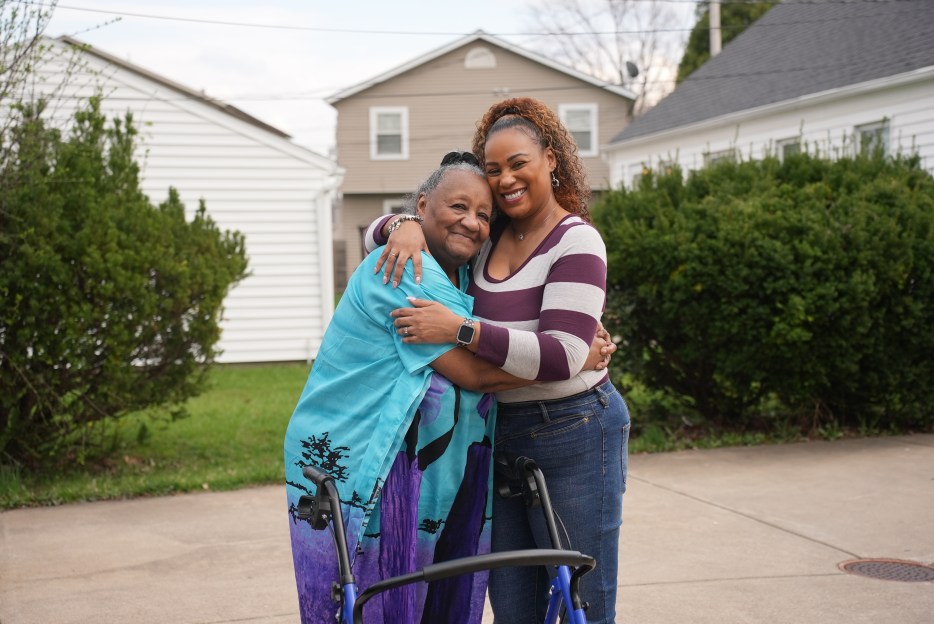
When Care Comes Full Circle: Tamika and Barbara’s Caregiving Story
Read more: When Care Comes Full Circle: Tamika and Barbara’s Caregiving StoryWe extend our heartfelt thanks to Tamika and Barbara for welcoming us into their home and being willing to share their experiences. We hope that by sharing their journey, others who find themselves in similar situations can find inspiration, support, and encouragement to build their own networks of care and connection. Family caregiving…
-
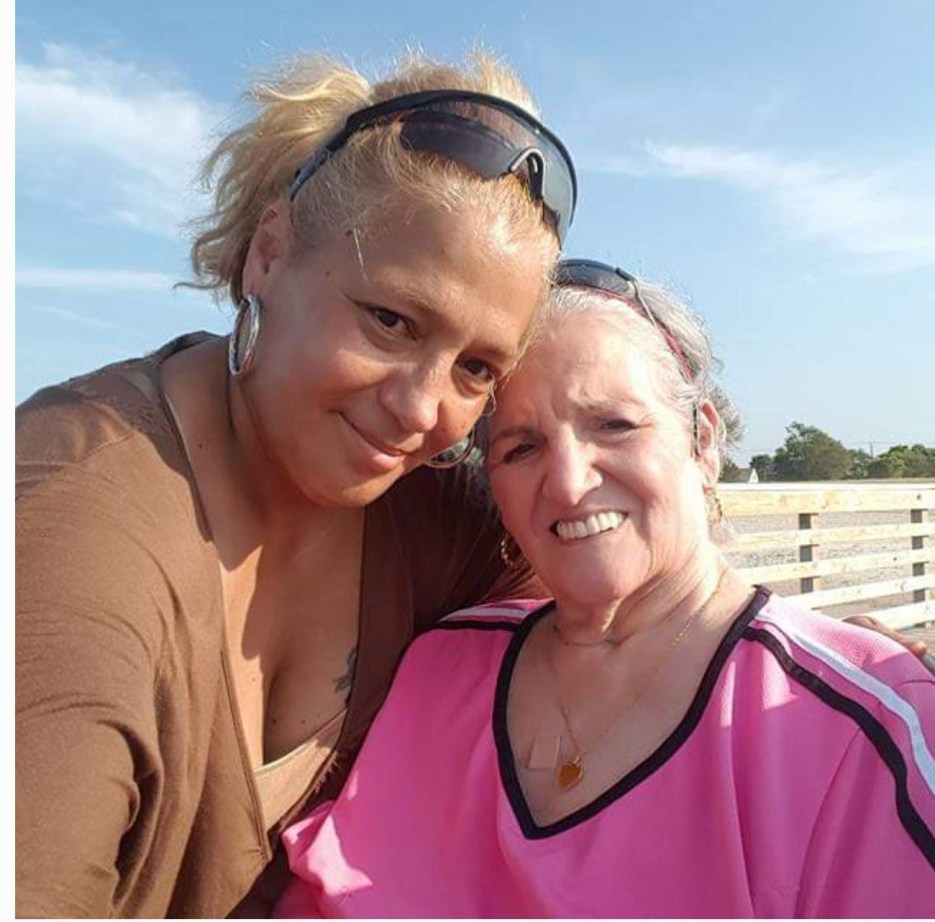
Finding Strength in Self-Care: A Letter to the Sandwich Generation
Read more: Finding Strength in Self-Care: A Letter to the Sandwich GenerationThe phrase, “Sandwich Generation” refers to adults who are simultaneously responsible for caring for their own children and their aging parents. As a former caregiver, this phrase described me best. I became a caregiver at 16 years old for my mother after her stroke and continued in that role for most of my…